Showing posts with label Foreign Sovereign Immunity Act (FSIA). Show all posts

Wednesday, March 28, 2012

Rubin v. Iran Cases Move Forward in First Circuit and U.S. Supreme Court

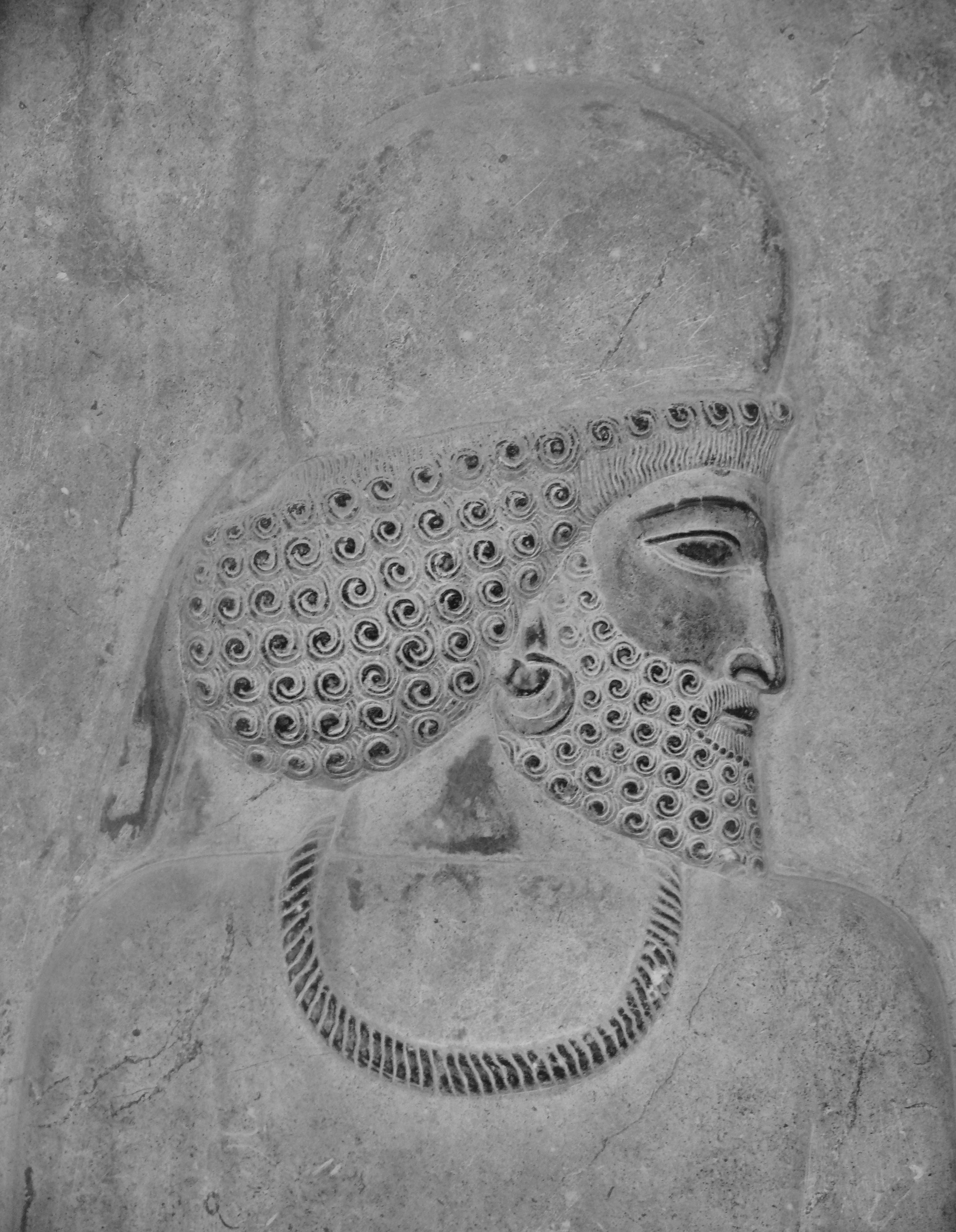
Photo credit: Alborzagros.  CC.
Jenny Rubin and others hurt by a 1997 terrorist attack in Israel filed a 92 page brief yesterday in the First Circuit Court of Appeals.  Rubin et al. v. Islamic Republic of Iran v. Museum of Fine Arts and Harvard University et al. is a case where the appellants seek to enforce a judgment awarded to them under the Terrorism Risk Insurance Act of 2002 (TRIA) by acquiring cultural artifacts claimed to be owned by Iran.  The objects sought are located in Boston and Cambridge, Massachusetts.  Meanwhile, Rubin et al. have also filed an appeal of their Seventh Circuit court case with the U.S. Supreme Court. That case involves an attempt to attach objects located at museums in Chicago.

Hamas carried out multiple suicide bombings on September 4, 1997.  The Rubin plaintiffs sued under the Foreign Sovereign Immunities Act (FSIA) in the United States District Court for the District of Columbia against Iran, and the court found that Iran supported Hamas’ terrorist efforts.  It ruled in the plaintiffs’ favor and awarded money damages.

To collect the judgment against Iran, Rubin et al. sought to attach Iranian assets located in the United States.  They attempted to attach artifacts held at the Boston Museum of Fine Arts (MFA), Harvard’s several museums, the Oriental Institute at the University of Chicago, and the Chicago Field Museum.  The museums in the Boston and Cambridge objected, fighting the case in federal district court in Massachusetts.  The Chicago based institutions battled the case in the federal court in the northern district of Illinois, and later the Seventh Circuit Court of Appeals.

The Seventh Circuit on March 29, 2011 sent the case back to the district court in Illinois for review.  But the Rubin appellants petitioned the U.S. Supreme Court for a writ of certiorari (i.e. a review by the higher court).  Briefs were filed in the Supreme Court (docket 11-431) by both the University of Chicago and Iran on January 6.  Jenny Rubin et al. filed a reply brief on January 18.  There was a waiver of the Field Museum’s response filed on January 4.  The Supreme Court on February 21 invited the Solicitor General to file the U.S. government’s position in the case.  It has not been submitted to the court thus far.

In Massachusetts, meanwhile, the district court ruled on September 25, 2011 to grant the MFA’s and Harvard’s motions to dismiss the case.  Jenny Rubin et al. then brought the matter before the First Circuit Court of Appeals.  They filed an appellate brief on March 28, 2012, arguing three primary issues.

First, the appellants argue that TRIA preempts all other federal and state laws because the case involves the enforcement of judgments by victims of a terrorist attack.  Their brief states:

“Pursuant to TRIA, and Treasury Regulations set forth at 31 CFR §535.201, governing collection actions on behalf of victims of state sponsored terrorism, any interest that Iran retains in the Iranian objects in Harvard and the MFA’s collection is subject to levy by the Appellants. Due to federal preemption by TRIA and 31 CFR §535.201 of any inconsistent state laws, neither Harvard nor the MFA can rely on any conflicting state laws such as those imposing statutes of limitation or governing adverse possession claims to bar or otherwise defeat the Appellants’ right to attach and levy on objects of Iranian origin in each of their possession in which Iran retains any interest.”

Second, the appellants say that Iran maintains an interest in the artifacts at the museums in Massachusetts.  The appellants claim that “[t]he Iranian government has always retained a private ownership interest in artifacts from Persepolis, the former capital of the Persian Empire. For the thousands of years beginning in the reign of Darius, this historic site has never been privately owned and always has been the sole property of the government of Persia and subsequently Iran. In addition, pursuant to the Persian Law Concerning the Preservation of National Antiquities (the “1930 Law”) enacted and in effect since November 3, 1930, all antiquities in Iran, whether movable or immovable, created up through 1794, the end of the Zand Dynasty, fall under the protection, control and ownership of the Iranian government.”

Third, the appellants argue that Iranian law gives Iran an interest in its antiquities unless that country gave a specific license.  They allege that the museums cannot demonstrate that any licenses were given.  The appellants’ brief argues:

“With the exception of objects removed from Persepolis . . .which have always been owned by the Persian government, other antiquities removed from Persia prior to November 3, 1930, were not recognized as owned by Iran. Accordingly, the Appellants always have indicated that the order of garnishment against the MFA and Harvard does not encompass any artifacts of Persian origin, other than those from Persepolis, that provably were exported from Iran prior to November 3, 1930. Nor do the Appellants assert any claim to any artifact from Iran acquired either by Harvard or by the MFA or on loan to either obtained from excavations by scientific expeditions to Iran occurring on or after November 3, 1930, if the holder Museum’s documentation as to the artifact establishes that the Museum acquired each such antiquity as part of the share of a “division” of finds assigned to a scientific archeological expedition as approved by the Persian/Iranian government and as required by the 1930 Law. Similarly, with respect to antiquities exported from Iran as a seller’s purported private property, the 1930 Law vests the government of Iran with an automatic 50 percent interest in all objects found in Iran on or after November 3, 1930. As to antiquities provably in private hands as of the enactment of the 1930 Law, the government is vested with a right of first refusal to acquire the object and a right to seize and confiscate the object if the seller attempts to circumvent his obligation to secure an export permit from the government, which if obtained, requires payment of an export duty equal to five percent of the value of the object as calculated by government appraisers.”

“Without documentary proof that an artifact was assigned to the scientific expedition or that the Iranian government approved the export of purportedly privately held property, Iran retains an interest in all objects under the 1930 Law that is subject to levy by the Appellants pursuant to TRIA.”

The appellees in the case are expected to file their reply shortly.

Tuesday, March 20, 2012

U.S. House Passes Foreign Cultural Exchange Jurisdictional Immunity Clarification Act


Congressman Steve Chabot
The U.S. House of Representatives by voice vote yesterday passed the Foreign Cultural Exchange Jurisdictional Immunity Clarification Act (FCEJICA).  The legislation seeks to protect foreign artwork on loan to American museums by clarifying a part of the Foreign Sovereign Immunities Act (FSIA).

The legislation was introduced by Judiciary Committee member Rep. Steve Chabot (R-OH) on February 24 and co-sponsored by Rep. John Conyers (D-MI), Rep. Lamar Smith (R-TX), and Rep. Steve Cohen (D-TX).  Their intent is to have a law that encourages more foreign lending of art to America without the fear of lawsuits.

Under the current federal statute known as Immunity from Seizure Under Judicial Process of Cultural Objects Imported for Temporary Exhibition or Display (the Immunity from Seizure Act (IFSA), 22 U.S.C. § 2459), foreign lenders are encouraged to lend cultural objects to museums in the United States without risk that those objects will become targets of litigation while on American soil.  The statute protects imported objects determined by the State Department to be (1) of cultural significance, (2) intended for temporary, nonprofit exhibition, and (3) in the national interest.  Museums importing objects into the U.S. for temporary display must apply for this legal protection.  The notice of immunity is then published in the Federal Register.

The FSIA, meanwhile, is a law that generally protects foreign states from lawsuits.  The FSIA embodies a long held principle of American jurisprudence.  But the law has been interpreted to sometimes grant jurisdiction to the courts over foreign governments when their artwork is displayed in the U.S. because such loans are deemed “commercial activity.”  Specifically, 28 U.S.C. 1605(a)(3) of the FSIA states:

 “A foreign state shall not be immune from the jurisdiction of courts of the United States or of the States in any case . . . in which rights in property taken in violation of international law are in issue and that property or any property exchanged for such property is present in the United States in connection with a commercial activity carried on in the United States by the foreign state; or that property or any property exchanged for such property is owned or operated by an agency or instrumentality of the foreign state and that agency or instrumentality is engaged in a commercial activity in the United States.”

By way of example, in the 2005 case of Malewicz v. City of Amsterdam the heirs of Kazimir Malevich sued Amsterdam in federal court in Washington, DC to either recover artworks that the city’s Stedelijk Museum loaned to American museums or to acquire $150 million in damages.  The heirs claimed that the foreign museum unlawfully obtained the paintings.  Amsterdam argued that the Immunity from Seizure Act protected it from a lawsuit, but the federal district court ruled that Amsterdam had engaged in “commercial activity” under the FSIA by loaning the art to American institutions.  While IFSA may protect artwork from seizure, the FSIA did not protect Amsterdam from related damages said the court.  So the lawsuit moved forward.

The FCEJICA was introduced in order to remedy potential conflicts between IFSA and the FSIA.  The bill adds a new section to the FSIA that protects foreign nations from lawsuits in American courts related to loaned artwork.  The bill that passed the Judiciary Committee on February 28 and the full House on March 19 states:

“If a work is imported into the United States from any foreign country pursuant to an agreement that provides for the temporary exhibition or display of such work entered into between a foreign state that it is the owner or custodian of such work and the United States or one or more cultural or educational institutions within the United States, [and] the President, or the President’s designee, has determined . . . that such work is of cultural significance and the temporary exhibition or display of such work is in the national interest; and the notice thereof has been published . . . any activity in the United States of such foreign state, or of any carrier, that is associated with the temporary exhibition or display of such work shall not be considered to be commercial activity by such foreign state . . . .”

The bill adds that art stolen by the Nazis shall not be protected from legal claims filed in federal court.

A House report attached to the bill notes that "the intent of IFSA is being frustrated by the Foreign Sovereign Immunities Act (FSIA). Recent court decisions have interpreted a provision of FSIA in a manner that opens foreign governments up to the jurisdiction of U.S. courts if foreign government-owned artwork is present in the United States in connection with a commercial activity and there is a claim that the artwork was taken in violation of international law." The report adds: "This has led, in many instances, to foreign governments declining to export artwork and cultural objects to the United States for temporary exhibition or display. Future cultural exchanges may be seriously curtailed by foreign lenders' unwillingness to permit their artwork and other cultural objects to travel to the United States. In order to keep the exchange of foreign government-owned cultural objects flowing, this legislation clarifies the relationship between the immunity provided by IFSA and the exceptions to sovereign immunity provided for in FSIA."

The Congressional Budget Office reported that enactment of the legislation "would have no significant impact on the federal budget."

The bill now goes to the Senate for its consideration.

This link contains a video of Judiciary Committee Chairman Rep. Lamar Smith's remarks on the floor of the House.

Saturday, April 2, 2011

Court of Appeals Decides Rubin v. Islamic Republic of Iran

The matter of Rubin v. Islamic Republic of Iran continues to wind its way through the federal court system. On March 29, 2011 the Seventh Circuit Court of Appeals issued a 41 page ruling in this complex case.

Deadly terrorist attacks in Jerusalem injured Jenny Rubin and several other Americans in 1997. Hamas carried out three bombings, receiving support from Iran. The American plaintiffs sued Iran in federal district court in Washington, DC and won a $71.5 million default judgment after Iran failed to appear in the case. Since then, there has been an effort by the plaintiffs to recover the judgment.

To retrieve the multi-million award, the plaintiffs filed legal paperwork in Illinois—through a process known as attachment—to seize two collections of antiquities located at the University of Chicago’s Oriental Institute. The cultural property includes the Persepolis and Chogha Mish Collections. The Oriental Institute excavated these Persian artifacts during the 1930s and 1960s, and it has maintained possession of them through a long-term academic loan. The museum says that it is ready to return the Chogha Mish objects to Iran. The plaintiffs also seek to attach a collection located at the Field Museum of Natural History in Chicago known as the Herzfeld Collection. The Field Museum purchased the Herzfeld objects in 1945, but the plaintiffs say that these artifacts were stolen from Iran during the earlier part of the twentieth century before their sale. The Field Museum continues to assert ownership of these antiquities while Iran does not make any claim to them.

The case triggered a dispute about how the federal Foreign Sovereign Immunity Act (FSIA) works. That law declares that a foreign state’s property located in the United States is immune from attachment. However, proving a statutory exception can defeat this immunity. If immunity is lifted, then a plaintiff can attach a foreign state’s property to satisfy a court judgment. The FSIA’s passage in 1976 was both a codification of and limitation on the longstanding legal principle that foreign nations are generally immune from court actions.

The plaintiffs litigated the case in the federal district court of the Northern District of Illinois, and Iran remained absent from the proceedings. When the magistrate judge ruled that only a foreign nation can claim sovereign immunity to its property under the FSIA--not a museum--Iran entered the case as a party to claim immunity. Together the Oriental Institute, the Field Museum, and Iran argued that the plaintiffs could not attach the cultural property contained in the three collections because of the immunity protections afforded by the FSIA.

After Iran entered the case as a party, the plaintiffs filed a motion for discovery to compel Iran to detail all its assets held in the United States, not just the cultural property located in Illinois. Iran objected to this request, but the district court magistrate judge sided with the plaintiffs. Iran filed an appeal with the Seventh Circuit Court of Appeals as a result, prompting the United States government to enter the case as a friend of the court (amicus curiae) in support of Iran’s position.

The Seventh Circuit considered the following questions.
1. Was the foreign state absolutely required to appear in federal court to activate the immunity protections given by the FSIA?

2. Does the FSIA protect a foreign state from broad discovery requests requiring it to give an accounting of all its foreign assets in the United States?

The district court answered yes to the first question and no to the second question. But the federal appeals court strongly criticized the lower court’s decision, calling its ruling “seriously flawed.” The Seventh Circuit wrote:

“The district court’s approach to this case cannot be reconciled with the text, structure, and history of the FSIA. Section 1609 of the Act provides that 'the property in the United States of a foreign state shall be immune from attachment' unless an enumerated exception applies. (Emphasis added.) This section codifies the longstanding common-law principle that a foreign state’s property in the United States is presumed immune from attachment. This presumptive immunity, when read with other provisions of the FSIA, requires the plaintiff to identify the specific property he seeks to attach; the court cannot compel a foreign state to submit to general discovery about all its assets in the United States. The presumption of immunity also requires the court to determine—sua sponte if necessary—whether an exception to immunity applies; the court must make this determination regardless of whether the foreign state appears.”

The case has been sent back to the district court, and the lower court must now handle the case consistent with the decision by the court of appeals.

The complete opinion can be found at http://www.ca7.uscourts.gov/fdocs/docs.fwx?caseno=08-2805&submit=showdkt